AI made your HR tools faster. Here is how to make the process better.
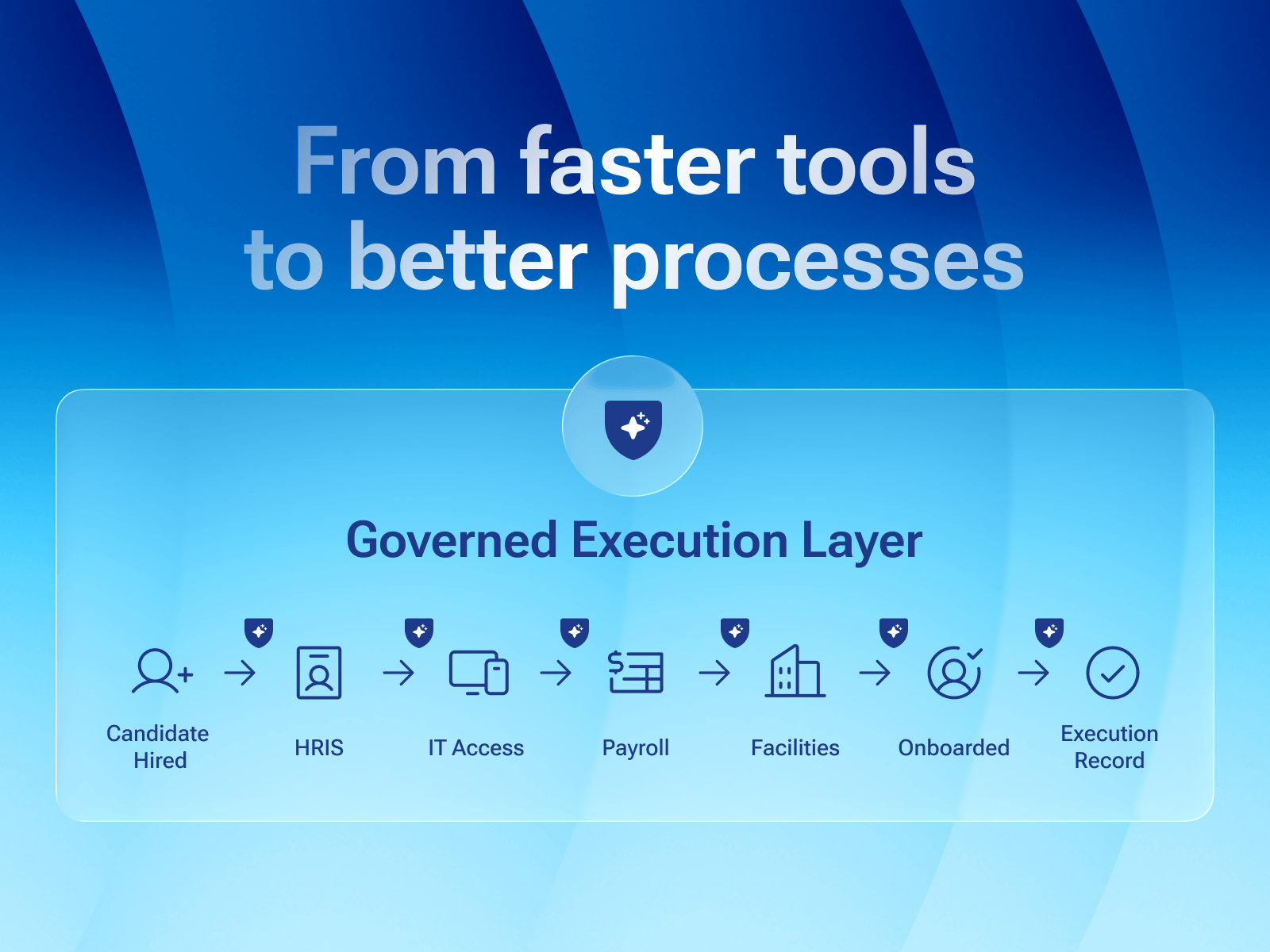
AI has made individual HR tasks faster across nearly every platform in the market. Job descriptions drafted in seconds. Candidates screened at scale. Onboarding checklists generated before the recruiter closes the tab. The productivity gains are real, they’re measurable, and they’re easy to report upward. The CHROs building on those gains have taken one additional step: they’ve governed the handoffs between systems, not just the work inside each one. That’s the difference between a process that runs faster and a process that runs better.
The entry point is the cross-system workflow – hire-to-onboard being the most common – where the coordination logic that currently lands on people gets replaced with architecture. Let’s look at what that changes.
What governs the process between systems
A hire-to-onboard workflow crosses HR, IT, payroll, and facilities. Each of those systems has its own logic, its own data model, and its own completion criteria. AI features built inside each platform improve the work within that boundary. They don’t carry context, state, and completion logic across the boundary between them.
The people carrying that logic today – the HR coordinators, IT liaisons, and operations staff who learned through experience which system needs to hear from which other system, and when – are doing architecture work the systems were never designed to do. Replacing that coordination with a governed execution layer means the process completes as a process, not as a series of faster individual steps held together by follow-up.
What the outcome looks like
When approval logic crosses team lines under defined policy, and completion in one system triggers the next step in another, the process changes in measurable ways. Coordination time drops. Handoff failures surface and resolve automatically. The new employee’s experience is determined by architecture, not by whether the right coordinator had time to follow up.
That outcome is harder to demonstrate than a productivity metric inside a single tool. It’s also the one that changes what the CHRO can credibly claim about how HR operates – and what the board actually asked about.
The question the vendor roadmap does answer
Productivity gains inside individual systems are worth having, and the platforms delivering them are doing real work. The question worth asking alongside the roadmap review is whether the handoffs are governed – whether the process completes as designed, end to end, with a record the CHRO can produce.
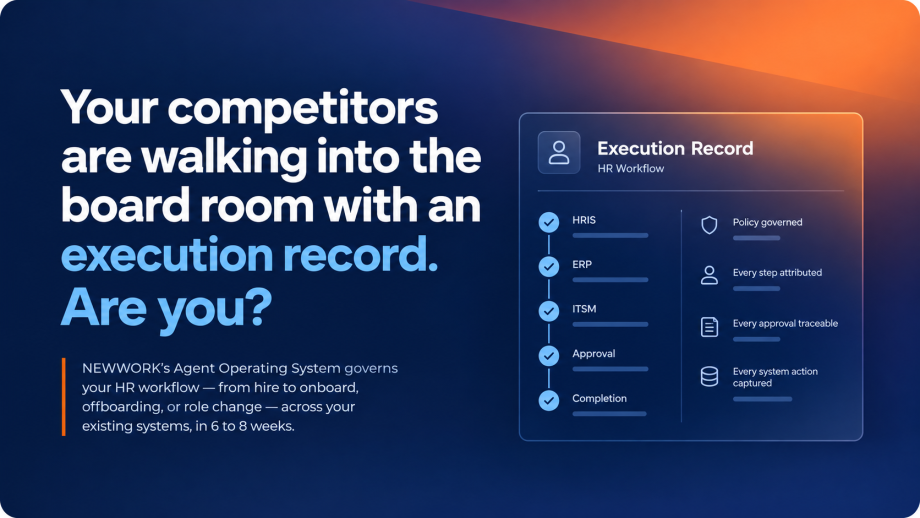
NEWWORK’s Agent Operating System produces a hire-to-onboard process that runs without the follow-up, on existing infrastructure, live in six to eight weeks. The coordination the architecture should hold stops landing on people. That’s the outcome that extends AI’s gains from faster individual tasks to a process that works.