59% of IT Leaders Cannot Show AI Value to Their Board. Here Is Why.
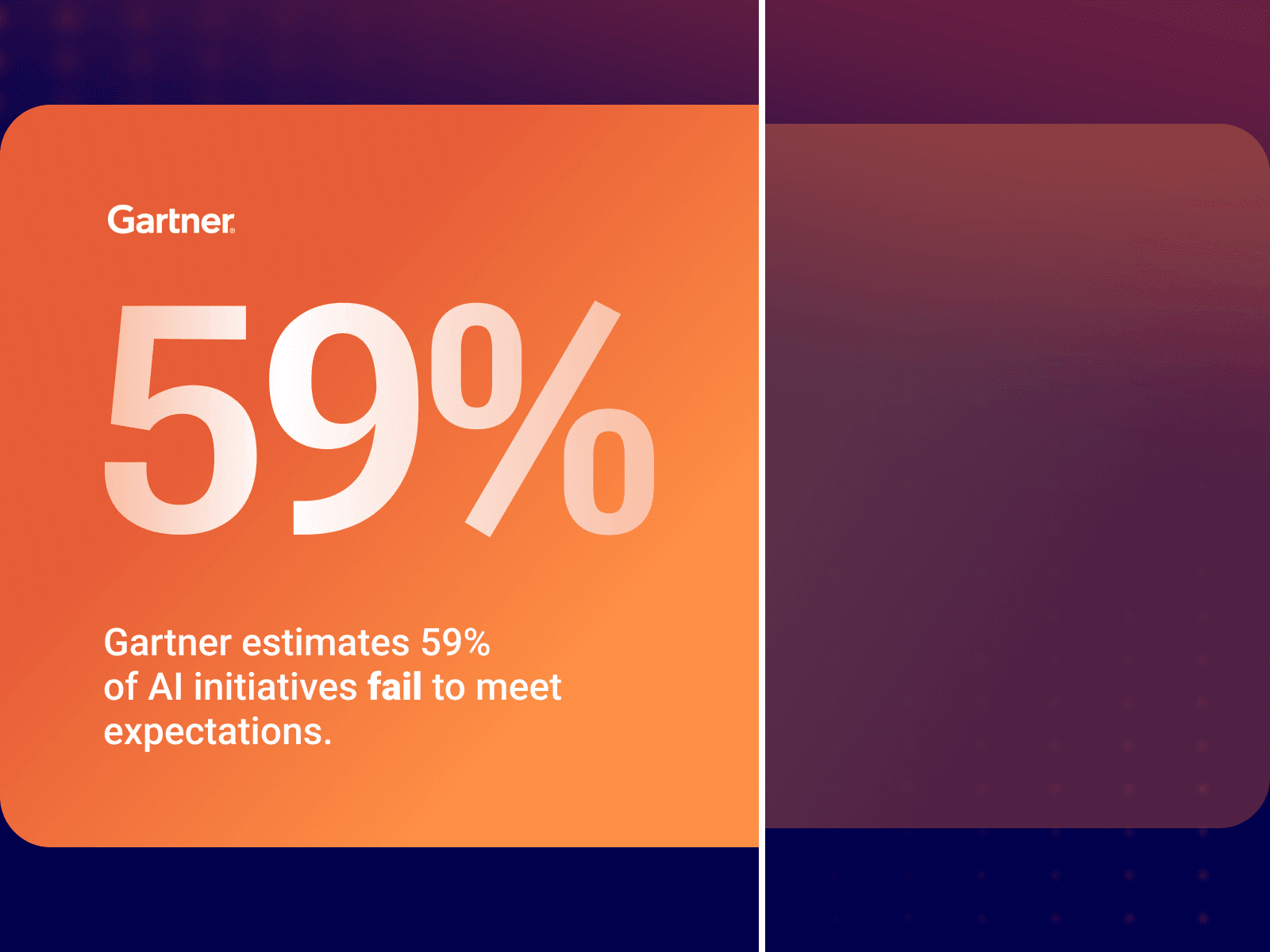
Enterprise investment in artificial intelligence has expanded faster than the infrastructure built to govern and complete that investment’s work. According to Gartner’s Q2 2026 research, 59% of IT leaders report little or unclear value from their AI investments, and only 39% of technology leaders are confident of positive AI ROI. Across the enterprise software sector, 40% or more of agentic AI projects are projected to be cancelled or abandoned before they reach scale.
These numbers are not an indictment of AI capability. They are an indictment of where AI has been placed within the enterprise architecture – and what has been left out of the design.
Let’s take a look at why the deployment model itself is producing the gap, and what CFOs need to understand about closing it.
Where AI Has Been Deployed – and Where It Stops
The pattern across most enterprise AI deployments follows a recognizable shape. A team identifies a task – drafting responses, surfacing recommendations, processing intake – and deploys an AI tool against it. The tool performs well within that boundary. It is faster than a human at the step it has been assigned, and the productivity gain is real.
The problem emerges when the work has to move. It crosses a system boundary, requires an approval, needs to be logged in a different platform, or depends on a policy check that lives in a separate workflow. At that point, a human steps in – not because the AI failed, but because the architecture was never built to carry the work past that step. The AI did what it was designed to do. The execution layer that would complete the job was missing.
The Structural Gap That Productivity Gains Cannot Close
Accounts payable offers among the clearest illustrations of this problem. Enterprise resource planning systems have been in place for decades, yet only 4% of finance teams have fully automated AP despite that investment. The tools have existed for years. The gap is not technological – it is structural. What sits between invoice intake, classification, policy verification, approval routing, and ERP posting is a series of handoffs that have always been filled by people, not because no one noticed, but because the architecture was never built to close them.
AI layered on top of that architecture accelerates the individual steps. It does not close the gap between them. What’s more, it can obscure the gap – because individual-step speed looks like progress until the board asks for an outcome-level result and the structured record that would verify that outcome does not exist.
What the Board Actually Requires
For the CFO, the consequence of this architecture is specific. When the board asks for evidence of AI ROI, the evidence that exists is qualitative: people report feeling more productive, responses arrive faster, drafts require fewer revisions. That evidence is real, but it is not boardroom-legible. A board requires a number – what changed, by how much, within what boundary, verified by what record.
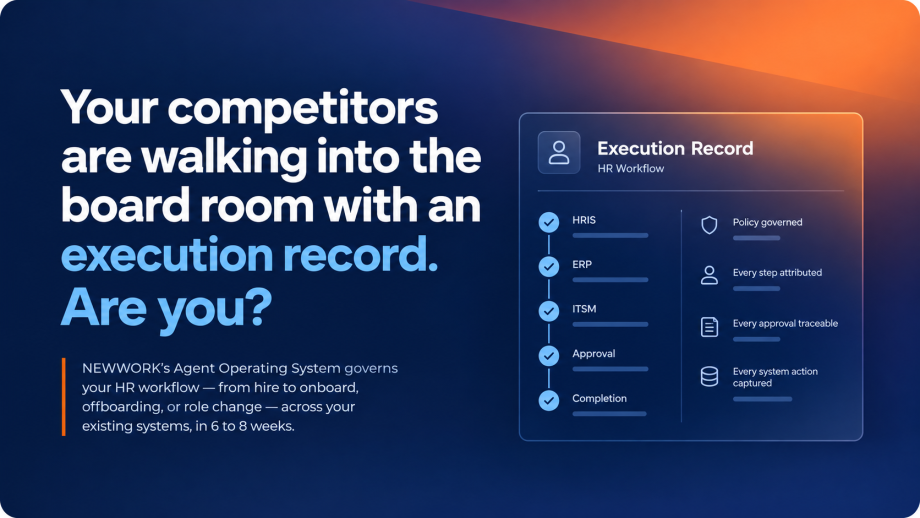
That record does not exist when AI runs above the workflow and humans run the workflow itself. The observable outcome – the structured execution record that maps an AI-initiated decision to a completed action – requires that the decision be routed, governed, and carried end to end without a human acting as the handoff mechanism. When that infrastructure is absent, activity accumulates. Outcomes the board can read do not.
Building the Layer Between AI and a Measurable Result
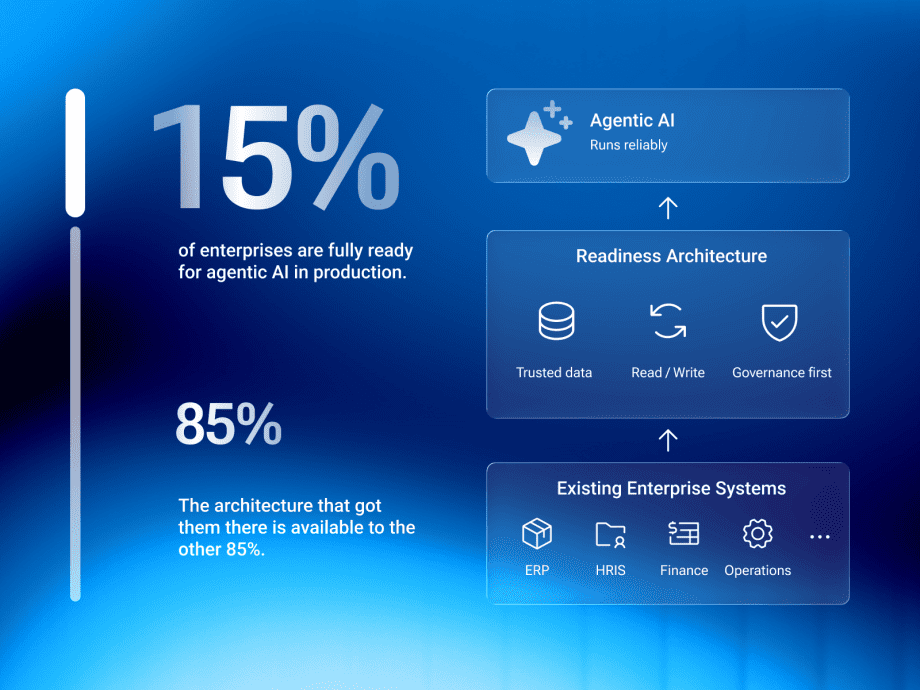
The organizations that will close the ROI gap are not those deploying more AI tools. They are those building – or beginning to build – a layer between their AI and their systems of record that makes every AI-initiated action observable, governed, and completeable end to end. This layer is not inside the ERP. It is not inside the AI tool. It sits above both and orchestrates between them, producing a structured execution record not as an afterthought but as a default output of every completed workflow.
For CFOs whose IT organizations are among the 59% with unclear results, the question is no longer whether AI is capable of performing the work. The question is whether the enterprise has built what is required to show the board that the work was done – and that the outcome was real. Organizations that stop evaluating AI for what it can do in isolation, and start asking what sits between that capability and a board-legible result, are the ones positioned to move that number.