The 4% of Finance Teams With Fully Automated AP Solved the Handoff Problem.
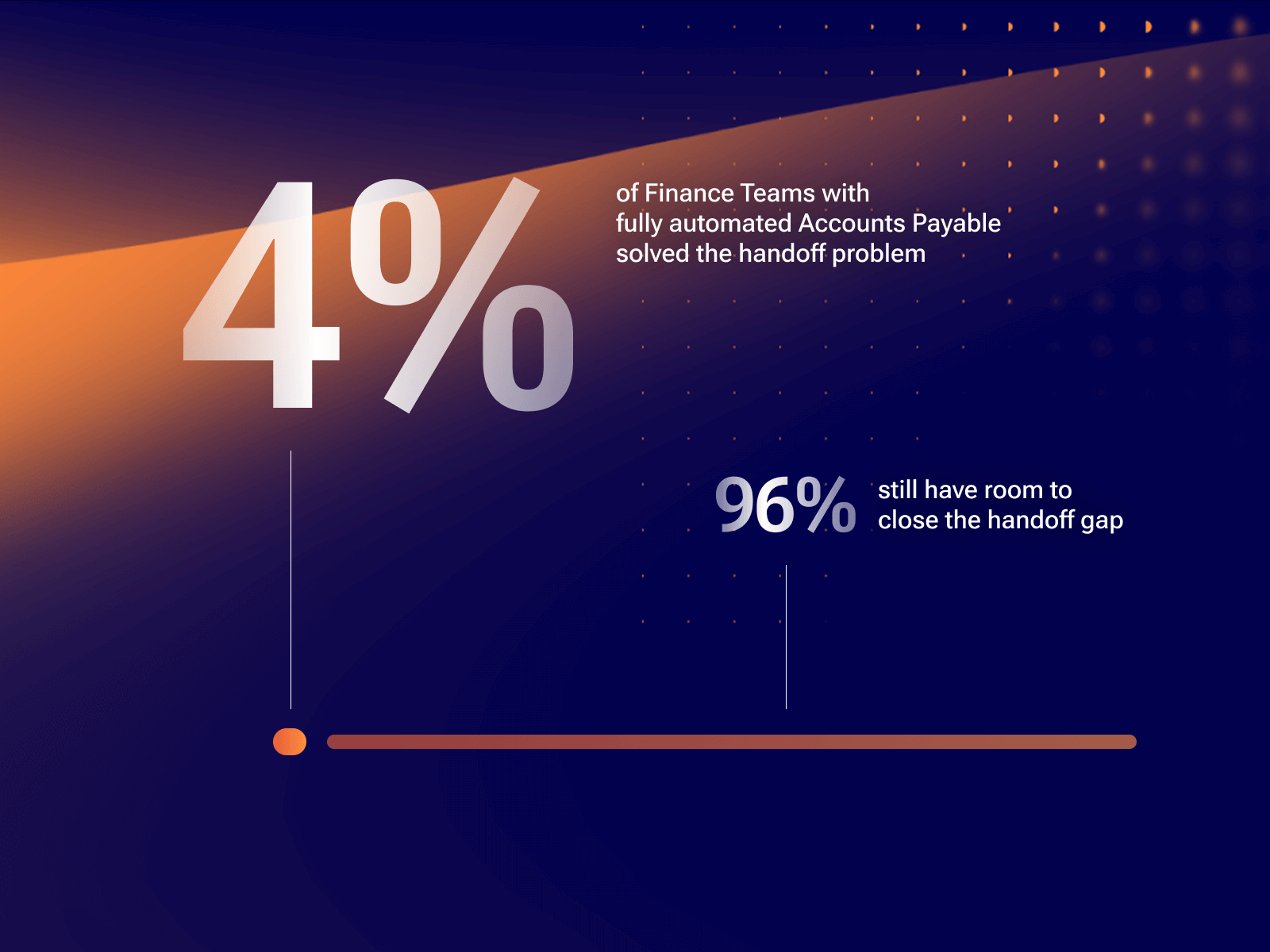
Ottimate’s 2026 State of AP Maturity Report, covered by CFO.com, surveyed more than 200 finance leaders and found that only 4% have fully automated AP from invoice to payment with no manual touchpoints. Partial automation sits at 93%. The gap between those two numbers is not a tool availability problem – the tools exist and most finance teams are already running them. The 4% solved one additional problem: they governed the handoffs between stages. That is the move available to the other 96%.
Let’s look at what the handoff problem is and what closing it produces.
Where the AP process breaks down
The AP process runs across three distinct stages: invoice intake, approval routing, and ERP posting. Each stage has capable tools. Invoice capture has OCR and AI-assisted data extraction. Approval workflows have routing tools and email-based escalation. ERP posting has connectors and batch upload processes. Each tool handles its own stage adequately.
The handoffs between stages are where partial automation stalls. When an invoice moves from intake to approval, the approval tool needs context the intake tool holds but doesn’t automatically pass. When approval completes, the result needs to post to the ERP – a transition that requires either a human or a point-to-point integration that has to be built, maintained, and updated whenever either tool changes. Each handoff is a gap. Each gap holds manual work. Across 5,000 invoices a month – the volume more than half of AP teams now process – the coordination labor in those gaps becomes the dominant cost in the process.
What the 4% have that the 96% are building toward
The finance teams that have closed the handoff gaps share a structural advantage: an orchestration layer above their existing tools that governs the transitions between stages. That layer knows when an invoice moves from intake to routing, enforces the approval policy, confirms the outcome, and posts the result – without a human managing each transition. The underlying tools continue to do what they were built to do. The orchestration layer connects them and governs the work between them.
The Ottimate finding that 48% of finance teams see little to no cost savings from their AP automation tools reflects the gap structure above. The tools reduced labor within each stage. The coordination labor between stages was unchanged, because no one governed the transitions. The orchestration layer is what changes that calculation.
The orchestration layer sits above existing tools
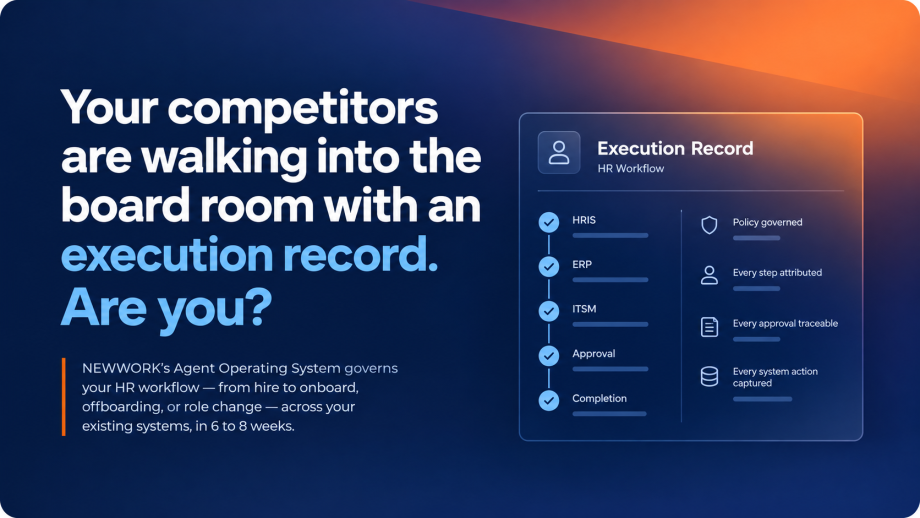
Moving from partial to full AP automation does not require replacing the intake tool, the approval workflow, or the ERP. It requires a layer above them that connects them, governs the handoffs, and produces a complete execution record for every invoice. Exceptions route to the right person with full context. Every action is logged. Every step is recoverable.
NEWWORK’s Agent Operating System governs that orchestration layer – with the FLOW engine coordinating invoice intake, approval routing, exception handling, and ERP posting as a versioned workflow with full audit traceability. The 4% figure measures how many finance teams have that layer in place. The tools to build it are available today.
Sources
Ottimate 2026 State of AP Maturity Report – CFO.com coverage (March 4, 2026)
Ottimate 2026 State of AP Maturity Report – primary source